
GOSE SENTO HOTEL Review: Stay, Eat, and Enjoy a Sento in Historic Gose, Nara
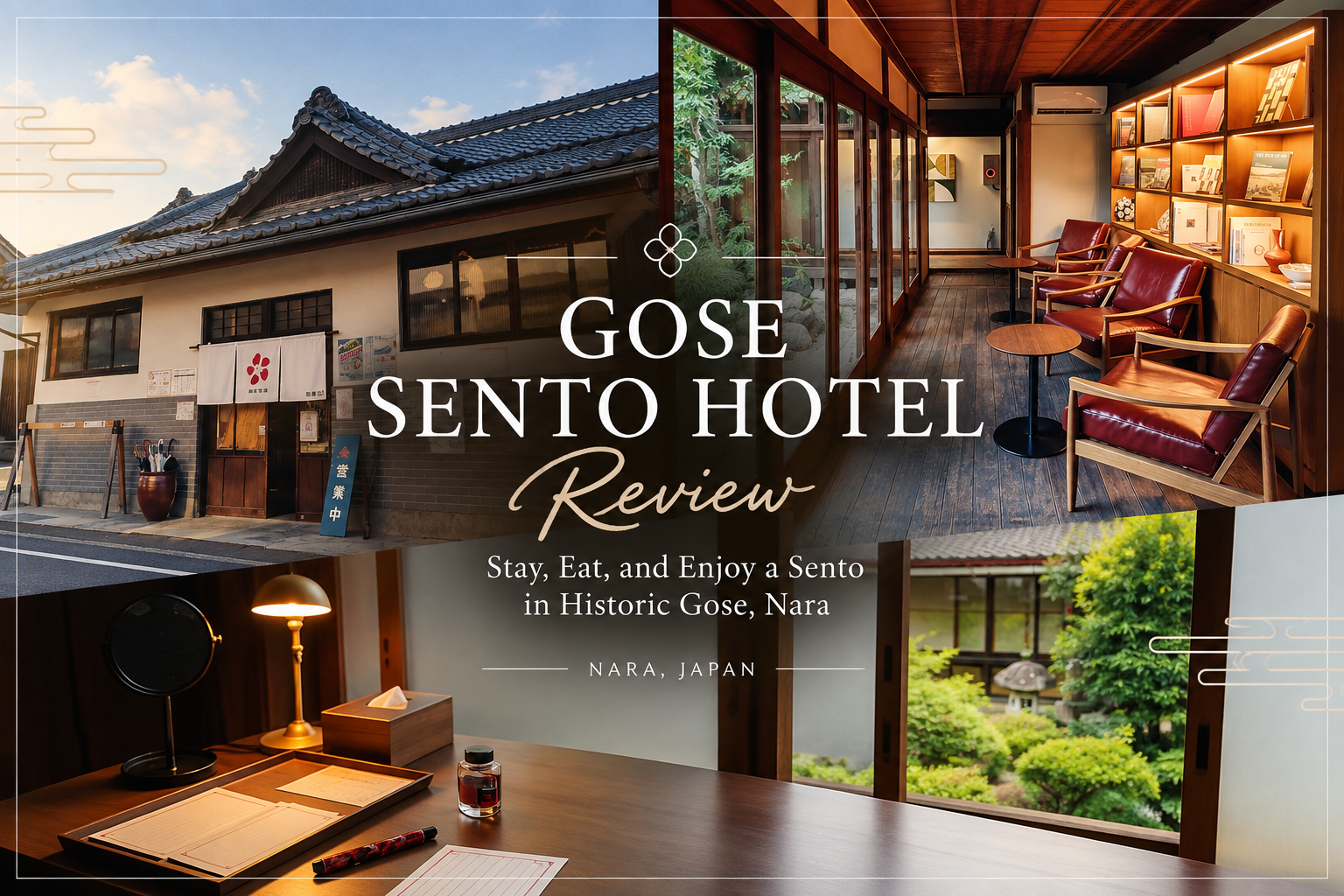
I recently took a trip to Gose City in Nara Prefecture, and it turned out to be a wonderful experience!
To be honest, I knew almost nothing about Gose before visiting. But I ended up being very impressed by the food, the accommodation, the public bath, and the atmosphere of the town itself.
One of the most interesting things about Gose is the GOSE SENTO HOTEL project, a community revitalization project that turns the entire historic neighborhood into something like one large hotel.
Instead of having your room, restaurant, and bath all inside one building, they are located in separate renovated buildings around town.You stay in one place, walk through the historic streets for dinner, and visit a traditional Japanese public bath, or sento, for a relaxing soak and sauna.
In this article, I’ll introduce the accommodation, restaurant, sento, and other places we visited during our stay in Gose.
Compared with major tourist destinations in the Kansai region, Gose still seems relatively unknown to international visitors.
If you want to experience a quieter and more local side of Japan, Gose is definitely worth considering.
- Want to discover a lesser-known destination in Nara
- Enjoy walking through traditional Japanese streets
- Like renovated traditional Japanese houses (kominka)
- Want to experience a local Japanese sento and sauna
- Prefer quieter destinations away from major tourist crowds
- Location: Gose, Nara Prefecture
- Best for: Couples, families, sauna lovers, and travelers looking for a quieter side of Japan
- Highlights: Kominka stay, local cuisine, sento & Finnish-style sauna
- Nearest stations: JR Gose / Kintetsu Gose
- English website: Available
- How to Get to Gose City
- Why We Visited Gose
- What Is the GOSE SENTO HOTEL Project?
- Where to Stay: UHN Nara Mannenhitsu Hompo and Yado Charinko
- Our Stay at UHN Nara Mannenhitsu Hompo
- Dinner and Breakfast at Yoshokuya Kemuri
- Gose Takarayu: A Traditional Sento with a Sauna
- Other Places to Visit in Gosemachi
- Final Thoughts: Is GOSE SENTO HOTEL Worth Visiting?
How to Get to Gose City
For detailed access information, please check the official Gose City website below.
https://www-city-gose-nara-jp.translate.goog/kankou/0000001479.html?_x_tr_sl=ja&_x_tr_tl=en&_x_tr_hl=ja&_x_tr_pto=wapp
By car, it takes approximately 50 minutes from central Osaka and around 1.5 hours from central Kyoto, depending on traffic.
If you are traveling by train, the closest stations are:
- JR Gose Station
- Kintetsu Gose Station
From Osaka Station, the journey takes approximately 1.5 hours. From Kyoto Station, expect around 1.5 to 2 hours.
The Gosemachi area introduced in this article is within walking distance of both stations, so you can certainly enjoy the town without a car.
However, if you also plan to explore central Nara or the beautiful natural areas of southern Nara Prefecture, traveling by car is more convenient.
Why We Visited Gose
To be honest, I knew almost nothing about Gose before this trip, even though we had lived in the Kansai region for more than 10 years.
I had previously visited Tenkawa Village in southern Nara, and this time we were planning to go canyoning in the area.
While searching Rakuten Travel, a popular Japanese travel booking website, for somewhere nearby to stay, I happened to find UHN Nara Mannenhitsu Hompo (formerly RITA Gosemachi).
The price was a little higher than the average hotel, but the beautifully renovated traditional building caught my attention. And then I saw that guests could also use a sento and sauna. That was enough to convince me!

Our canyoning experience with Aozora Fun was fantastic! My elementary-school-aged daughter especially loved it.
I’ve also written an English review of our family canyoning experience in Nara, so check it out if you are looking for another activity to combine with a trip to Gose.

What Is the GOSE SENTO HOTEL Project?
The GOSE SENTO HOTEL project is a community revitalization project centered around the historic Gosemachi area.
One of its key locations is Gose Takarayu, a traditional public bath that closed in 2008. GOSE SENTO HOTEL project HP: https://www.gosemachi.com/
The bathhouse was restored and reopened in 2022, while other old buildings in the neighborhood were renovated into accommodation and restaurants.
What makes the project especially interesting is its concept of separating “stay, eat, and bathe” into different locations around town.
You stay at UHN Nara Mannenhitsu Hompo or Yado Charinko.
You eat at Yoshokuya Kemuri.
And you bathe at Gose Takarayu.
Instead of spending your entire stay inside one hotel building, you naturally walk around Gose to move between these locations. I really liked this concept.
Walking from our accommodation to the restaurant and sento gave us the chance to enjoy the historic streets of Gose and made the town itself feel like part of the hotel.
There is also a walking map introducing local shops in the area. We stopped at places such as a traditional Japanese confectionery shop and a local liquor store, which made exploring the neighborhood even more enjoyable.
GOSE SENTO HOTEL has an official English website with information about its accommodation, restaurant, public bath, and access, making it easier for international travelers to plan a stay.
https://en.gosemachi.com/
However, the level of spoken English support on-site may vary.
Where to Stay: UHN Nara Mannenhitsu Hompo and Yado Charinko
There are two main accommodation options associated with the GOSE SENTO HOTEL project:UHN Nara Mannenhitsu Hompo and Yado Charinko.
① UHN Nara Mannenhitsu Hompo
UHN Nara Mannenhitsu Hompo is a small luxury accommodation created by renovating an old fountain pen shop.
UHN Nara Mannenhitsu Hompo HP:https://ink-stay.com/
There are only four guest rooms:
- Maskantus – for 1–2 guests, with one king-size bed, 38m2
- Pueraria – for up to 3 guests, with two beds and one sofa bed, 43m2
- Angelica – for up to 3 guests, with two beds and one sofa bed, 68m2
- Rhododendron – for up to 5 guests, with one king-size bed, two semi-double beds, and one sofa bed, 65m2
We stayed in Rhododendron, the largest room. And we absolutely loved it.
When we stayed here, the accommodation was called “RITA Gosemachi.” It was renamed “UHN Nara Mannenhitsu Hompo” on August 29, 2026. Although the name has changed, the rooms and overall accommodation experience remain essentially the same.
② Yado Charinko
Another option is Yado Charinko, which was created by renovating an old bicycle shop. Even the guest rooms have bicycle-themed names such as Saddle, Bell, Handle, and Pedal.
For more information about Yado Charinko, please check the official website below
https://www.gosemachi.com/charinko/
There is space for bicycles in the lounge, and guests staying in the Saddle and Pedal rooms can even keep their bicycles inside their rooms.
So if you are traveling around Japan by bicycle, this could be a particularly interesting place to stay.
Our Stay at UHN Nara Mannenhitsu Hompo
Now let me show you the accommodation where we actually stayed.
UHN Nara Mannenhitsu Hompo(formerly RITA Gosemachi) is about a five-minute walk from JR Gose Station or Kintetsu Gose Station.
Free parking is also available. The parking area is shared with Gose Takarayu and is about a three-minute walk from the accommodation.
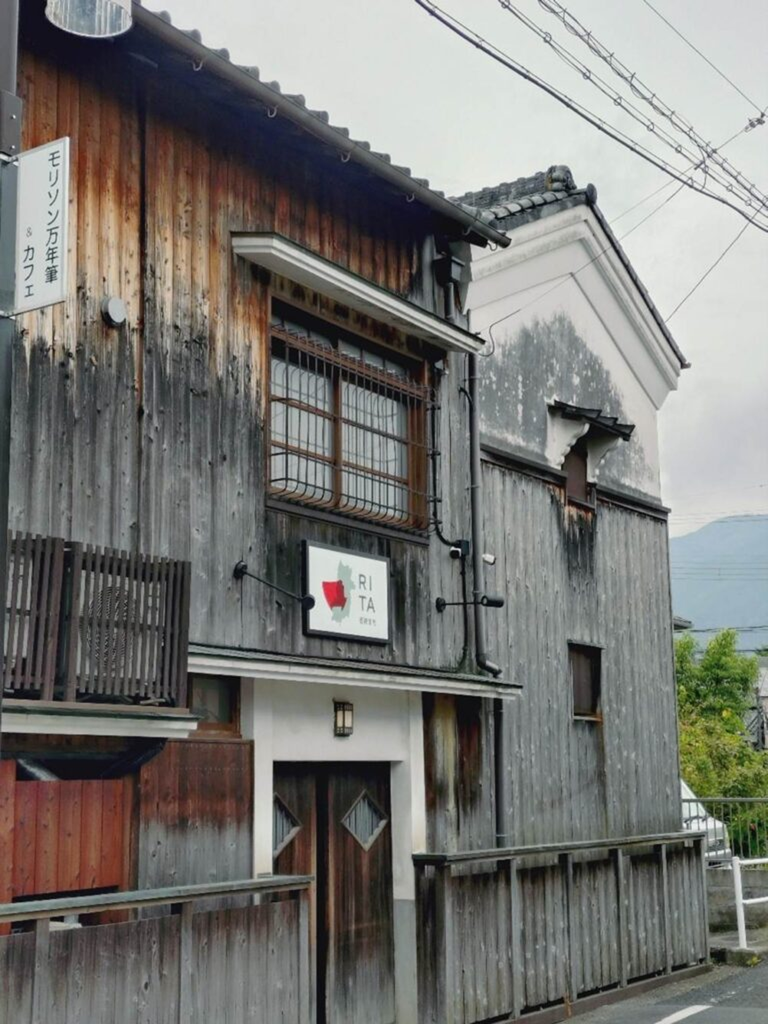
The exterior of the accommodation looks like picture below. Since the building was originally an old fountain pen shop, it retains the atmosphere of a traditional Japanese kominka. If you enjoy historic Japanese architecture, you will probably love this place.
Kominka are traditional Japanese houses, generally built using traditional wooden architecture. Many old kominka across Japan have been renovated into hotels, restaurants, and cafés while preserving their original character.
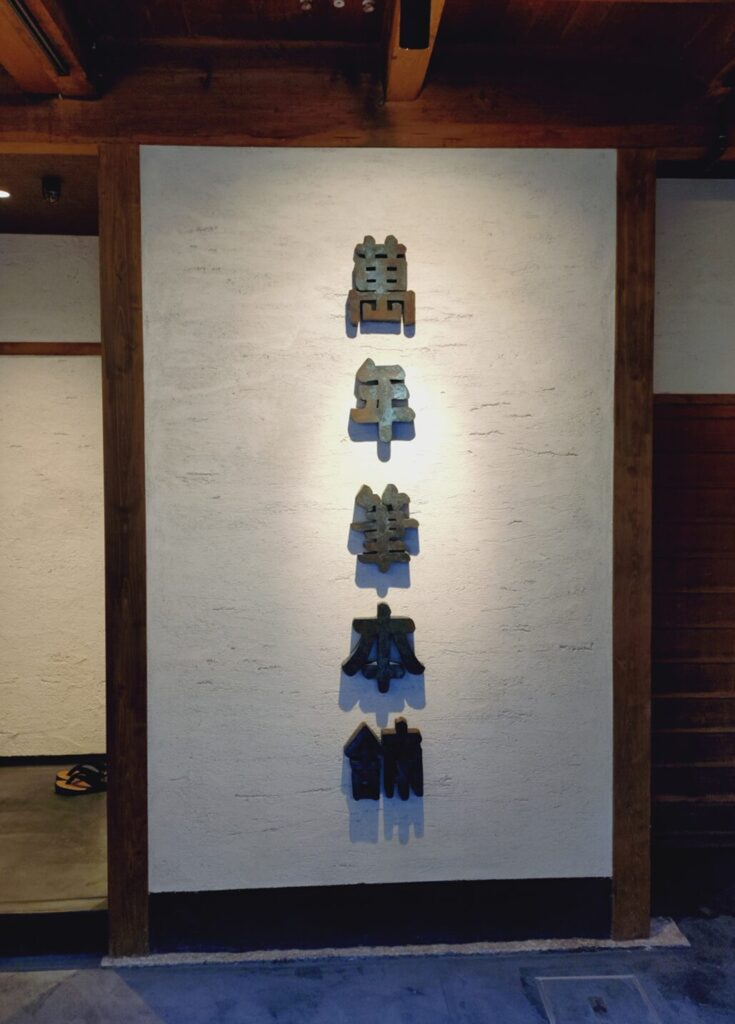
When you open the entrance door, you are greeted by the old “萬年筆本舗” sign on the wall, a reminder of the building’s history as a fountain pen shop.
The staff were also extremely friendly and attentive throughout our stay.
There is a small courtyard in the center of the building, with a sofa area overlooking it. I was already impressed before we even reached our room.
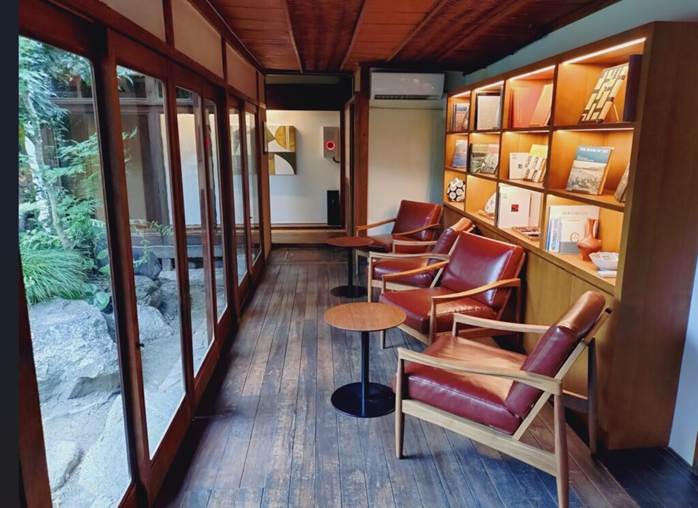
From the sofa area, we went upstairs to Rhododendron, our room for the night.
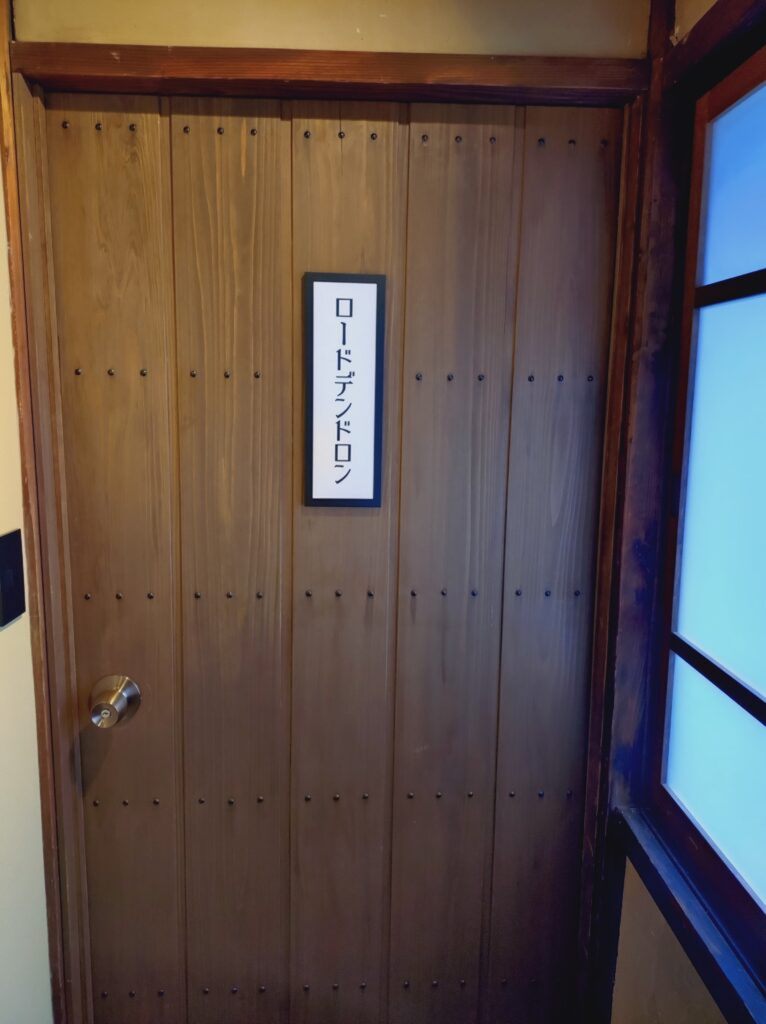
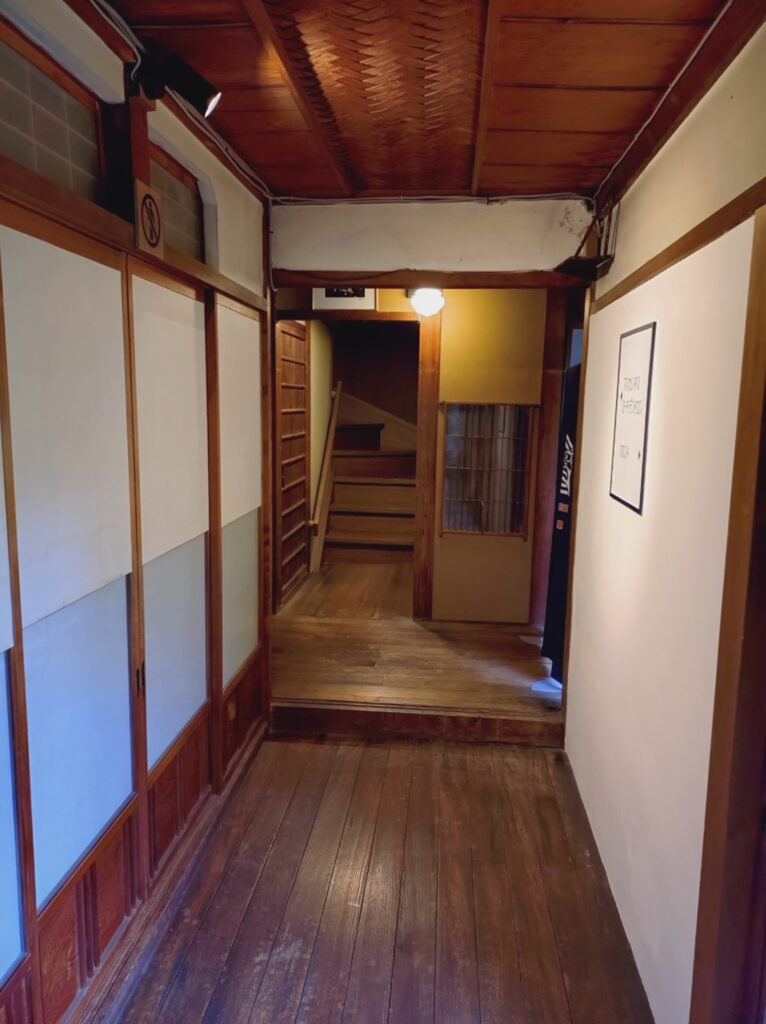
Rhododendron Room
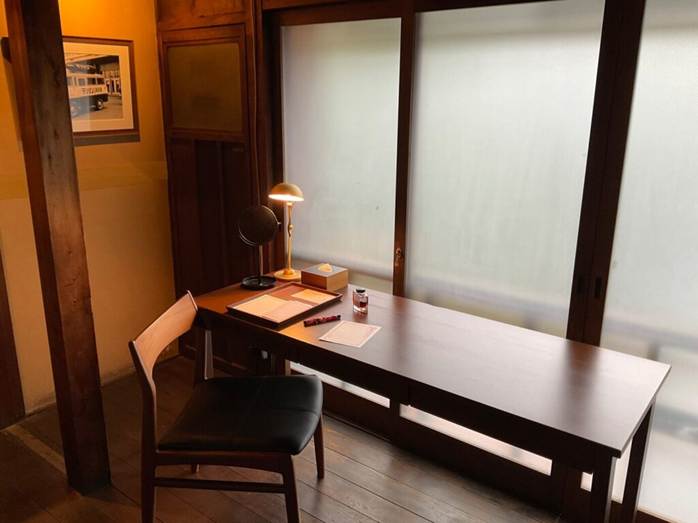
As soon as you enter the room, you’ll find a beautiful little writing area. A fountain pen, ink, and paper are provided on the desk, and guests are free to use them.
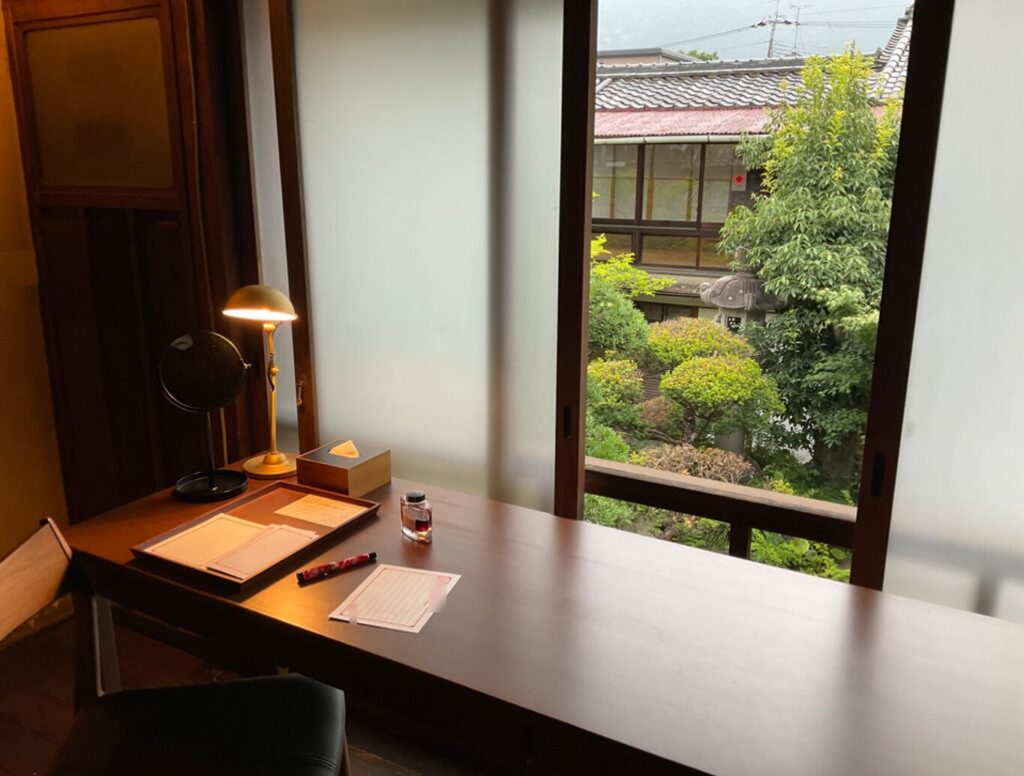
Open the window in front of the desk and you can look out over the courtyard. Writing a letter with a fountain pen while looking at a traditional Japanese courtyard feels surprisingly special.
We were served a welcome drink and Japanese sweets here when we arrived.
There is also a coffee set and refrigerator. Drinks inside the refrigerator are available for purchase, and you simply tell the staff what you consumed when checking out.
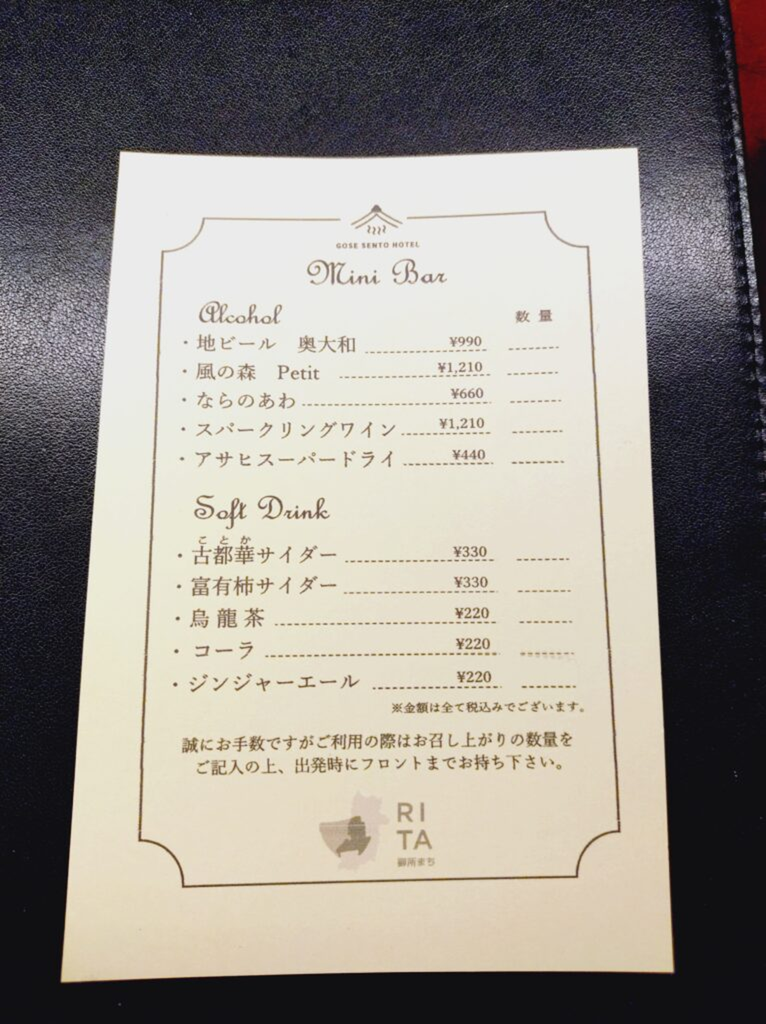
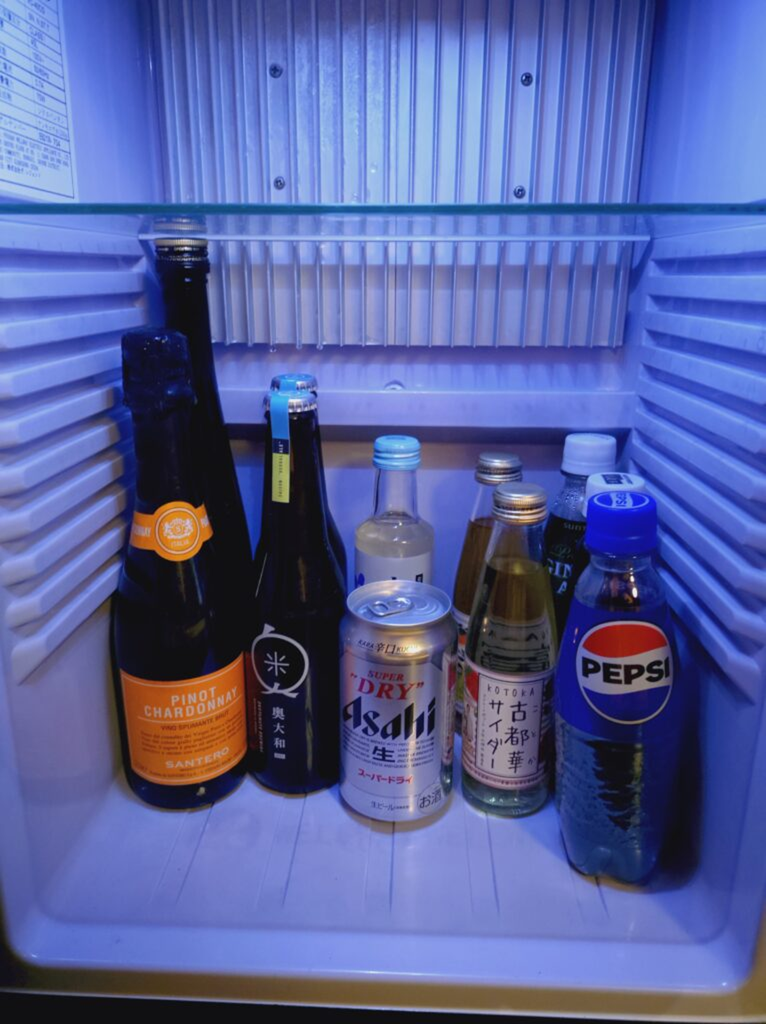
There are few convenience stores nearby, and there is no vending machine inside the accommodation, so keep this in mind if you want drinks or snacks during your stay.
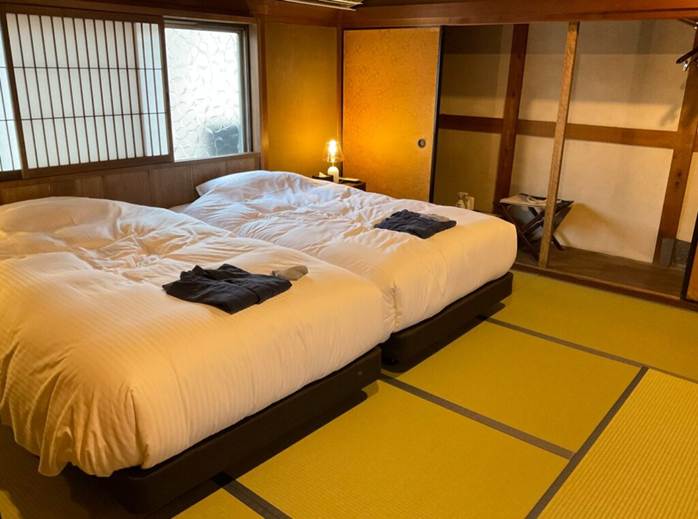
Beyond the living room is the first bedroom, with two semi-double beds.
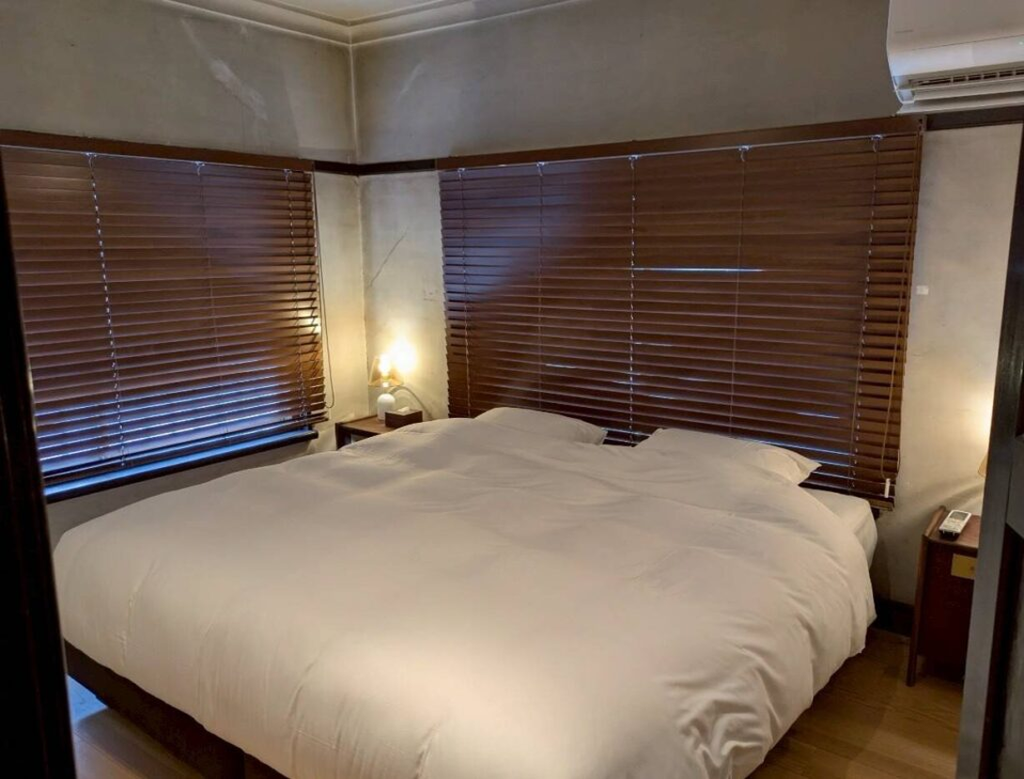
Next to it is another bedroom with a king-size bed.
The washroom has two sinks and a large mirror, and the entire space is bright and beautifully renovated.
But one of my favorite parts of the room was the bath. It is a hinoki cypress bath, so you can relax while enjoying the distinctive aroma of Japanese cypress.
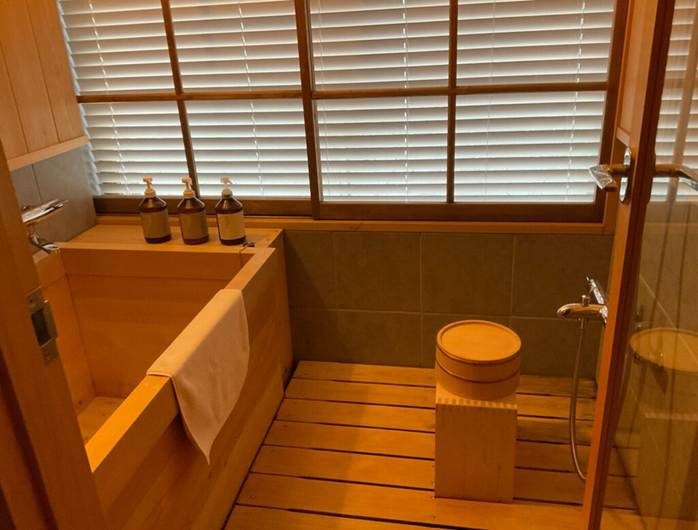
Bath towels, face towels, shampoo, conditioner, and body soap are all provided.
Although this is an old traditional building, it has been thoroughly renovated with modern conveniences. The toilet has a washlet, the bath can be filled automatically, there are standard power outlets and USB Type-A ports beside the beds, and of course the rooms have air conditioning.
So you can enjoy the atmosphere of a traditional Japanese house without sacrificing modern comfort.
There is also no TV and no clock in the room. That might sound unusual, but I actually liked it. It creates a quiet atmosphere where you can simply slow down and relax. If you love reading, this is a great place to spend a peaceful evening with a book.
Dinner and Breakfast at Yoshokuya Kemuri
Both dinner and breakfast were served at Yoshokuya Kemuri.
For more information about Yoshokuya Kemuri, please check the official website below.
https://www.gosemachi.com/kemuri/
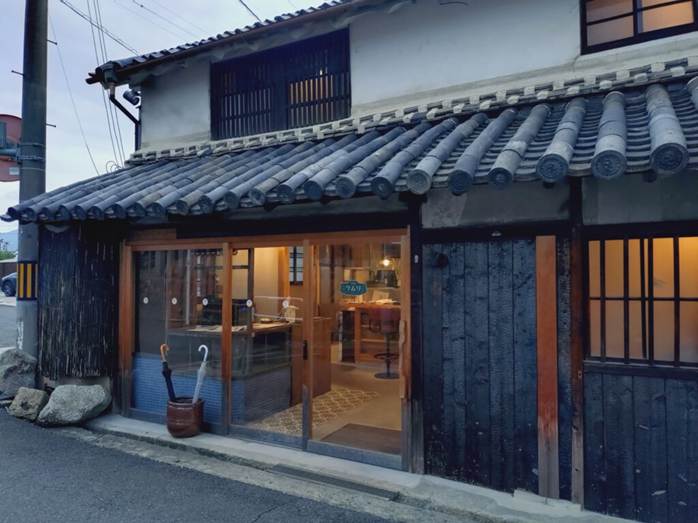
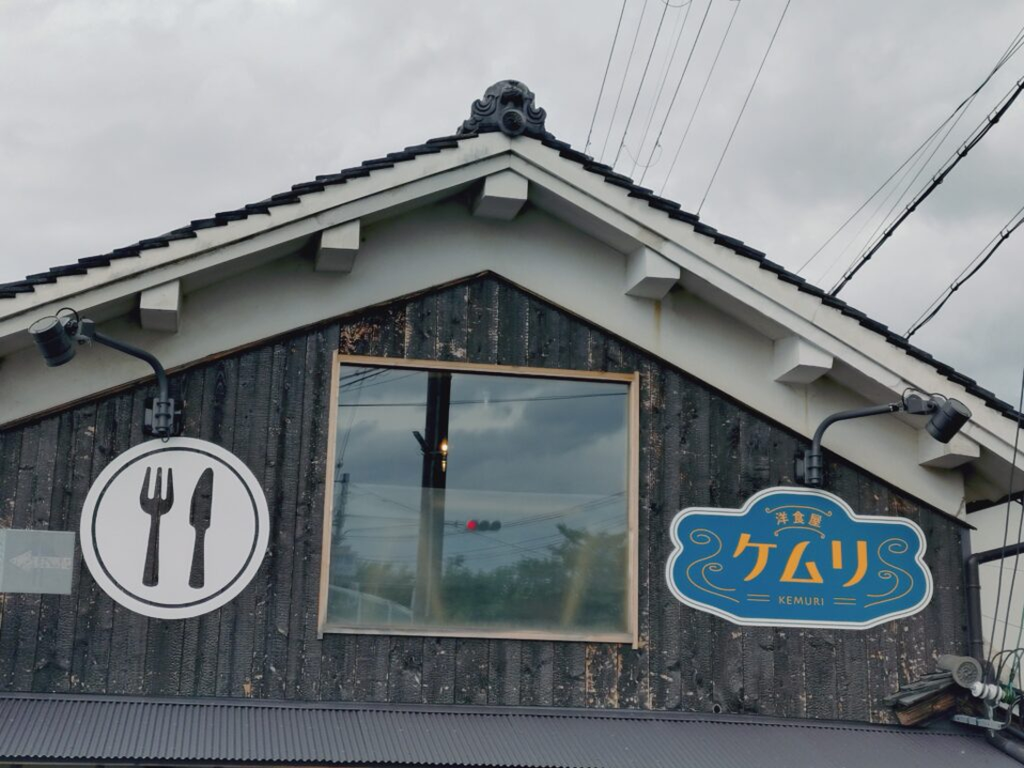
The restaurant is about a 5–7 minute walk from UHN Nara Mannenhitsu Hompo, or around 3–5 minutes from Yado Charinko.
Kemuri itself is another renovated kominka. The building was originally a tobacco shop and has been transformed into a restaurant serving dishes made with local ingredients.
Children can choose either a smaller version of the adult course with fewer dishes or a separate kids’ menu.
Like the accommodation, the restaurant retains the character of the original building while incorporating a clean, modern interior. It is a very comfortable space.
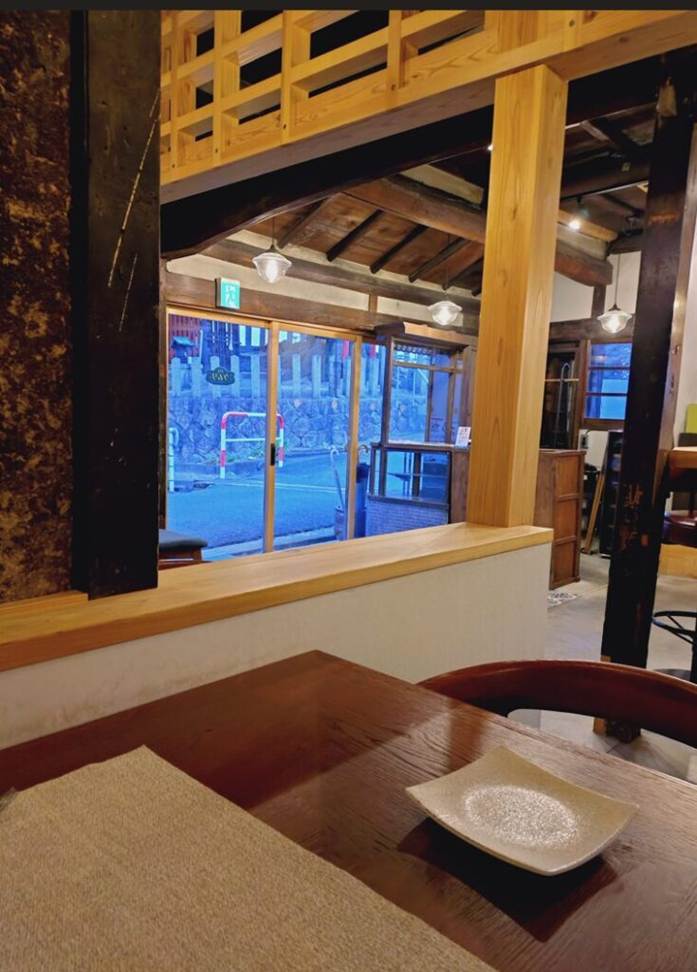
And most importantly: The food was excellent!
① Dinner
Our dinner was a leisurely course meal that took about two hours from appetizer to dessert. You can also enjoy locally produced alcoholic drinks with your meal.
Here are some of the dishes we had.
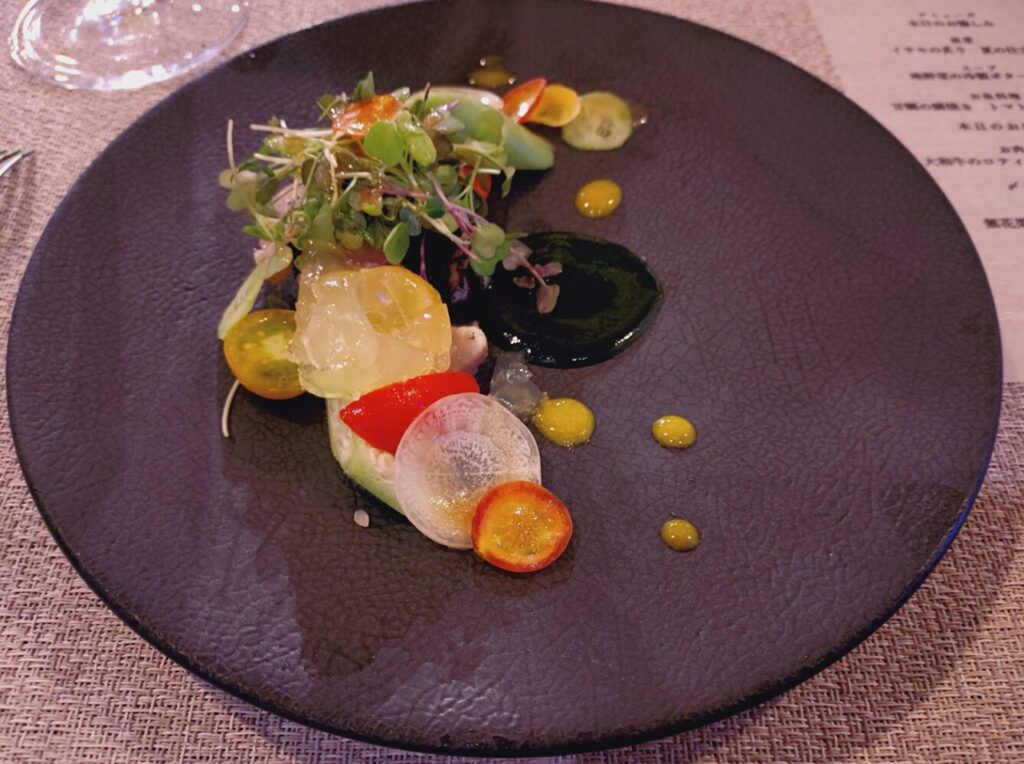
◆Appetizer – Seared Isaki (grunt fish)
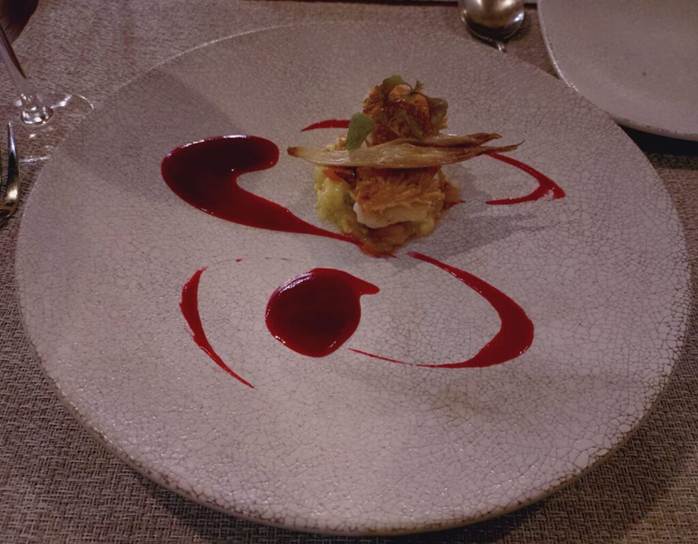
◆Fish Course – Crispy-scaled Amadai (tilefish)
◆Meat Course – Roasted Yamato Beef
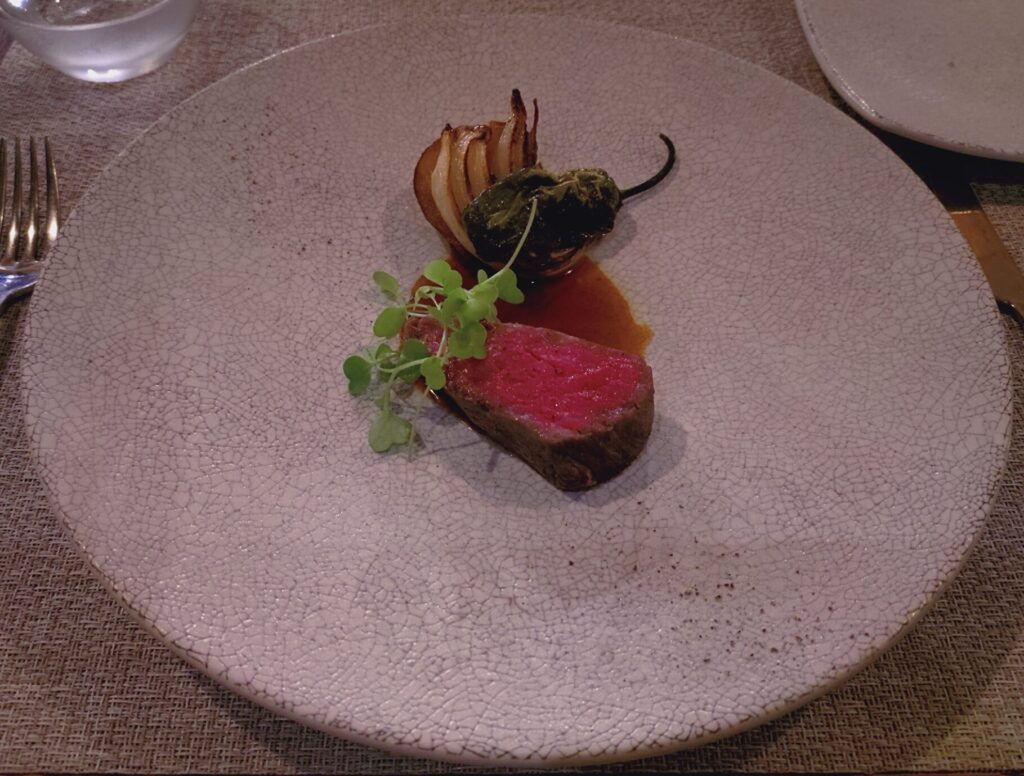
Everything was delicious. Yamato Beef is a local brand of beef from Nara Prefecture, so it was especially nice to enjoy local ingredients while staying in the area.
② Breakfast
The next morning, we walked through the streets of Gose back to Yoshokuya Kemuri for breakfast. Even the simple walk through the quiet historic neighborhood in the morning was enjoyable.
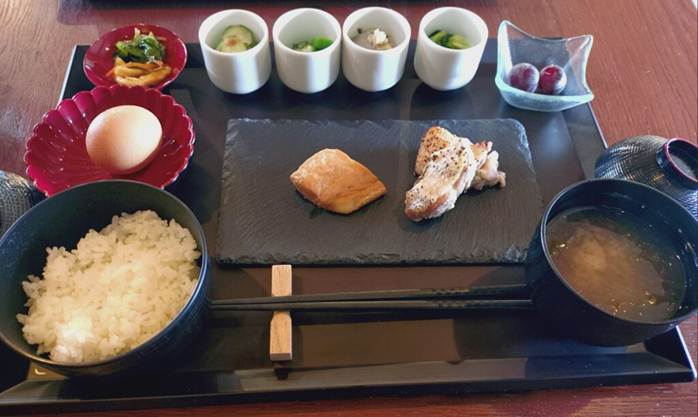
Our breakfast included fish, grilled chicken, several small vegetable dishes, miso soup, rice, and a raw egg. It was a generous Japanese-style breakfast.
And once again, everything was delicious!
Gose Takarayu: A Traditional Sento with a Sauna
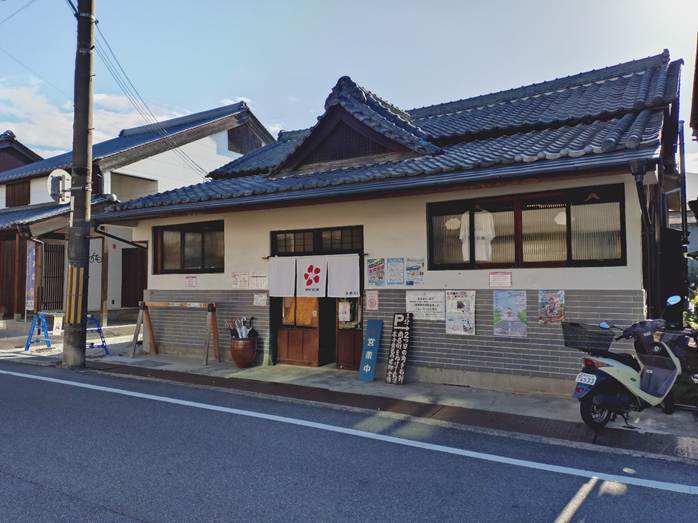
Another highlight of the GOSE SENTO HOTEL experience is Gose Takarayu.
A sento is a traditional Japanese public bathhouse.
UHN Nara Mannenhitsu Hompo has its own private hinoki baths, but if you are staying here, I definitely recommend visiting Takarayu as well.
Gose Takarayu is only about a two-minute walk from both UHN Nara Mannenhitsu Hompo and Yado Charinko.
In fact, the entire GOSE SENTO HOTEL project began with the revival of this bathhouse, so it is an important part of the experience.
For more information about Gose Takarayu, please check the official website below.
https://www.gosemachi.com/takarayu/
① Opening Hours
At the time of our visit, the opening hours were:
| Hours | |
| Weekdays | 2:00 PM – 10:00 PM |
| Weekends & Holidays | 11:00 AM – 10:00 PM |
| Closed | 2nd & 4th Wednesday |
Unfortunately, it isn’t open in the morning, so you can’t enjoy an early morning bath.
Opening hours may change, so I recommend checking the official website before visiting.
② Admission Fees
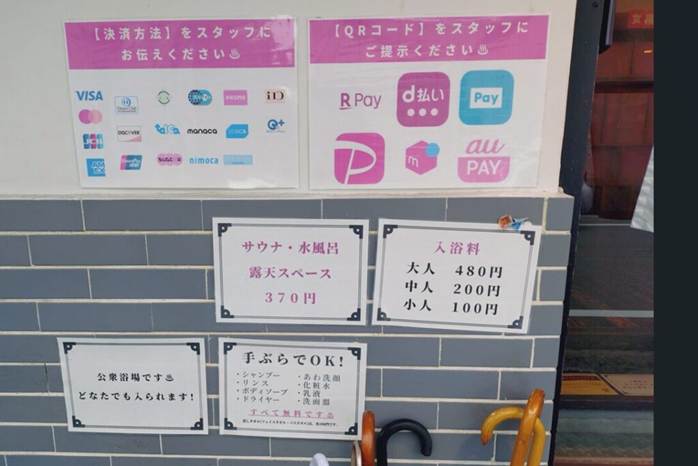
Gose Takarayu has both public baths and a sauna. The sauna requires an additional fee, and sauna users wear a wristband.
One major benefit of staying at UHN Nara Mannenhitsu Hompo or Yado Charinko is that admission to the bath, sauna use, and towel rental are included in your stay.
At the time of our visit, the regular prices for non-guests were:
| Price | |
| Adults (12+) | ¥480 |
| Children (6–11) | ¥200 |
| Children under 6 | ¥100 |
| Sauna | +¥370 |
Face towels and bath towels could also be rented for ¥100 each.
Credit cards, transportation IC cards, iD, QUICPay, and various QR-code payment services were accepted when we visited.
Again, prices and payment methods can change, so check the latest information before visiting.
③ Bath and Sauna
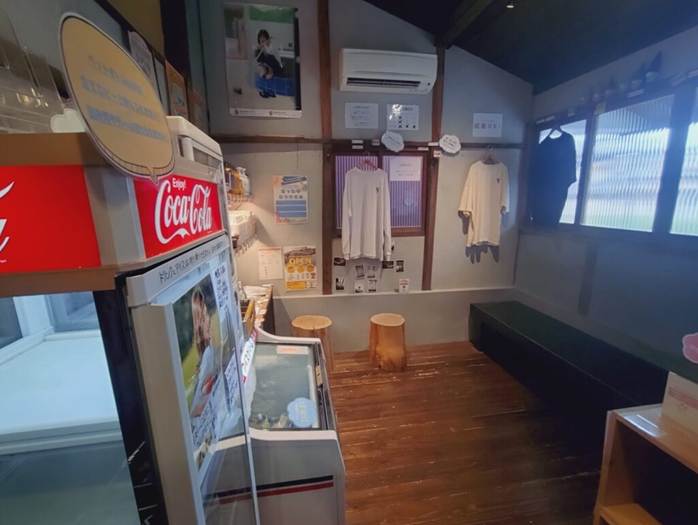
When you enter Takarayu, you’ll find the reception desk on the left and a small merchandise area with benches on the right. Water and Pocari Sweat are available for purchase, which is useful if you plan to use the sauna.
They also sell original merchandise such as sauna hats and T-shirts.
The changing room has free lockers and hair dryers, and skincare products are also available.
Inside the bathing area, there are showers and two main baths. One is hotter at around 43°C (109°F), while the other is slightly cooler at around 41°C (106°F).
Beyond a glass door is the sauna area, including a cold plunge and an outdoor rest area.
The rest area is relatively small and has six wooden stools. There is no roof above it, so you can enjoy the fresh air after your sauna session.
The sauna itself is Finnish-style and has enough bench space for around six people. When I visited, the temperature was a little over 80°C (176°F). The Finnish-style sauna also allows self-löyly, meaning you can pour water onto the heated sauna stones yourself to create steam.

鳴山シンゴshingonaruyamaプロフィールを編集
The cold plunge is large enough for around two adults. According to the facility, the water is around 15°C (59°F) in summer and can range from below 10°C (50°F) to around 14°C (57°F) in winter.
Want to know more about Gose Takarayu?
I’ve written a detailed review of its Finnish-style sauna, baths, admission fees, and facilities in the article below. Check it out!
④Tattoos
As of 2026, guests with tattoos can use Gose Takarayu from Monday to Thursday. Tattoos are not permitted on Fridays, weekends, or public holidays. As rules may change, I recommend checking with the facility before visiting.

If you’re new to Japanese public baths and saunas, check out my guide to Japanese sauna rules and etiquette before your visit. Knowing the basic customs will help you enjoy the experience with confidence!

Other Places to Visit in Gosemachi
There are several small local shops within walking distance of UHN Nara Mannenhitsu Hompo. If you are visiting Gose, I recommend walking around the neighborhood and picking up some local products as souvenirs.
We visited these two shops.
1)Akebono – Japanese Confectionery Shop
This shop sells traditional Japanese sweets such as mizu-yokan-style sweets, warabi mochi, fruit daifuku, and other seasonal items.
We bought some Japanese sweets here to take home.
2)Higashikawa Liquor Store
This local liquor store sells a wide range of Japanese alcoholic drinks, including Kaze no Mori, a well-known sake produced in the Gose area.
They also sell gin, shochu, fruit liqueurs, and other drinks. Some of the gin bottles looked so stylish that I ended up buying several—both for myself and as gifts!
Final Thoughts: Is GOSE SENTO HOTEL Worth Visiting?
Absolutely!
Gose was a destination I knew almost nothing about before visiting, but it turned out to be one of those places that makes you glad you went somewhere outside the major tourist areas.
What I especially liked about the GOSE SENTO HOTEL project is that the town itself becomes part of your stay.
You sleep in a renovated traditional building, walk through historic streets to enjoy dinner, visit a revived neighborhood sento and sauna, and stop at small local shops along the way.
The old streets and buildings have been beautifully preserved while being renovated with modern comforts, and the combination feels very natural.
Gose is also relatively easy to reach from Osaka, especially by car.
If you are looking for a quieter destination in Nara where you can experience traditional architecture, local food, sento culture, and everyday life in a small Japanese town, I highly recommend adding Gose to your itinerary.
It became one of my favorite discoveries in Nara—and we liked UHN Nara Mannenhitsu Hompo so much that we actually returned and stayed there again the following year.
Fin