Japanese Sauna Etiquette: Rules & Manners You Should Know Before Visiting
鳴山シンゴ
シンゴのつなてんブログ
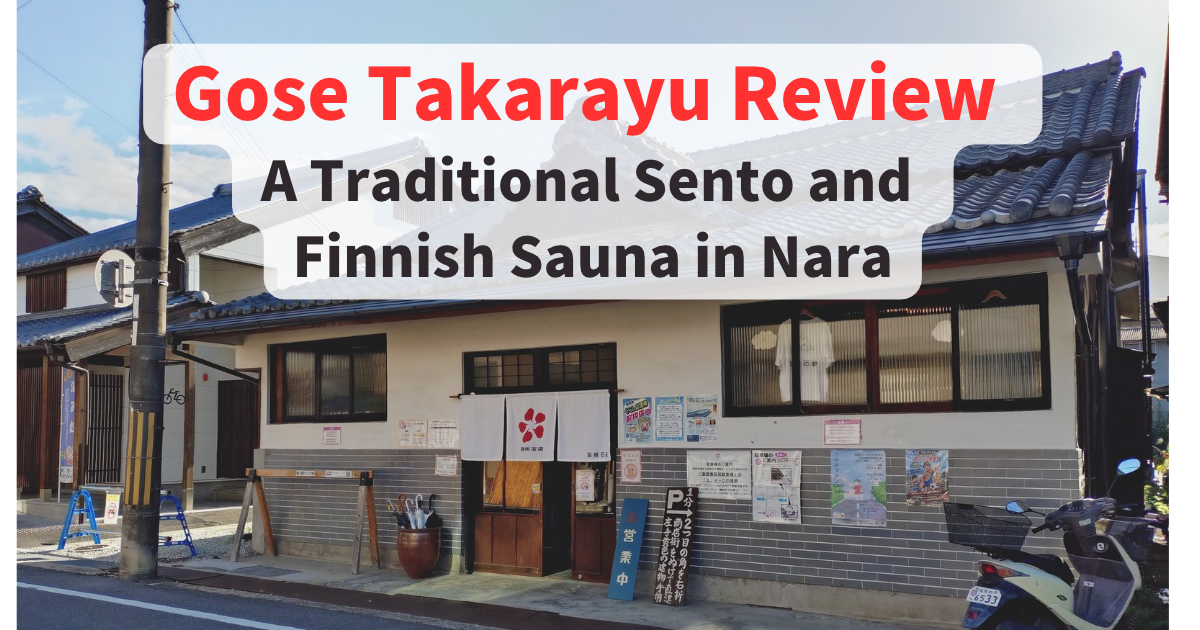
I recently visited Gose Takarayu, a traditional Japanese public bath with a Finnish-style sauna in Gose City, Nara Prefecture!
Gose Takarayu is not just an ordinary public bath. It originally closed in 2008 but was beautifully restored and reopened in 2022 as part of the GOSE SENTO HOTEL project, a local revitalization initiative. The project brings together accommodation, restaurants, and a public bath in separate buildings throughout the historic town of Gose.
During our family trip, we stayed at a nearby traditional Japanese accommodation and had the opportunity to enjoy Gose Takarayu.
As a sauna lover, I was particularly excited to try its Finnish-style sauna!
In this article, I’ll share my experience at Gose Takarayu, including its facilities, sauna, admission fees, tattoo policy, and useful tips for international visitors. Let’s take a look!
| Items | Details |
| Location | Gose City, Nara Prefecture |
| Facility | Traditional Japanese public bath (sento) |
| Sauna | Finnish-style sauna with self-löyly |
| Cold plunge | Available for sauna users |
| Outdoor relaxation | Available |
| Nearest stations | JR Gose / Kintetsu Gose |
| Parking | Available |
| Tattoo policy | Restrictions apply; see below |
| Official website | https://www.gosemachi.com/takarayu/ |
Gose Takarayu is a traditional Japanese public bath located in the historic town of Gose, in southern Nara Prefecture. The bathhouse originally closed in 2008 but was restored and reopened in 2022.
Its renovation was part of the GOSE SENTO HOTEL project, which aims to revitalize the historic town by bringing new life to existing buildings.
One of the most interesting features of this project is that accommodation, dining, and bathing facilities are located in different buildings around town.
Visitors can stay in a renovated traditional Japanese house, enjoy a meal at a local restaurant, and walk through the historic streets to Gose Takarayu for a bath. I really like this concept because the town itself becomes part of the travel experience.
Gose Takarayu also combines the nostalgic atmosphere of an old Japanese bathhouse with modern bathing and sauna facilities. The exterior has a charming traditional appearance, while the interior has been renovated to provide a comfortable bathing experience.
A sento is a Japanese public bathhouse where people can wash, bathe, and relax. Unlike an onsen, which uses natural hot spring water, a sento does not necessarily use hot spring water.
Sento have traditionally been part of everyday life in Japan, and visiting one is a great way to experience local Japanese culture.

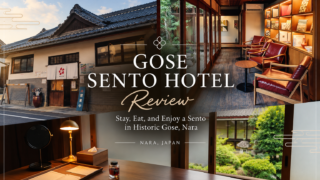
Want to learn more about the GOSE SENTO HOTEL project?
We stayed at UHN Nara Mannenhitsu Hompo (formerly RITA Gosemachi), a renovated traditional Japanese accommodation in Gose. I’ve written a detailed review of our stay, the local restaurant, and the historic town in the article below!
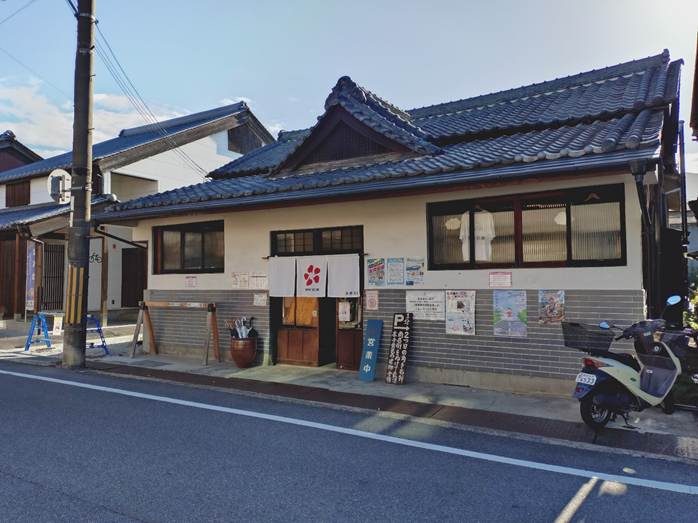
Here is what Gose Takarayu looks like from the outside.
The building has the charming appearance of a traditional Japanese sento, with its tiled roof and classic entrance. I really love the nostalgic atmosphere!
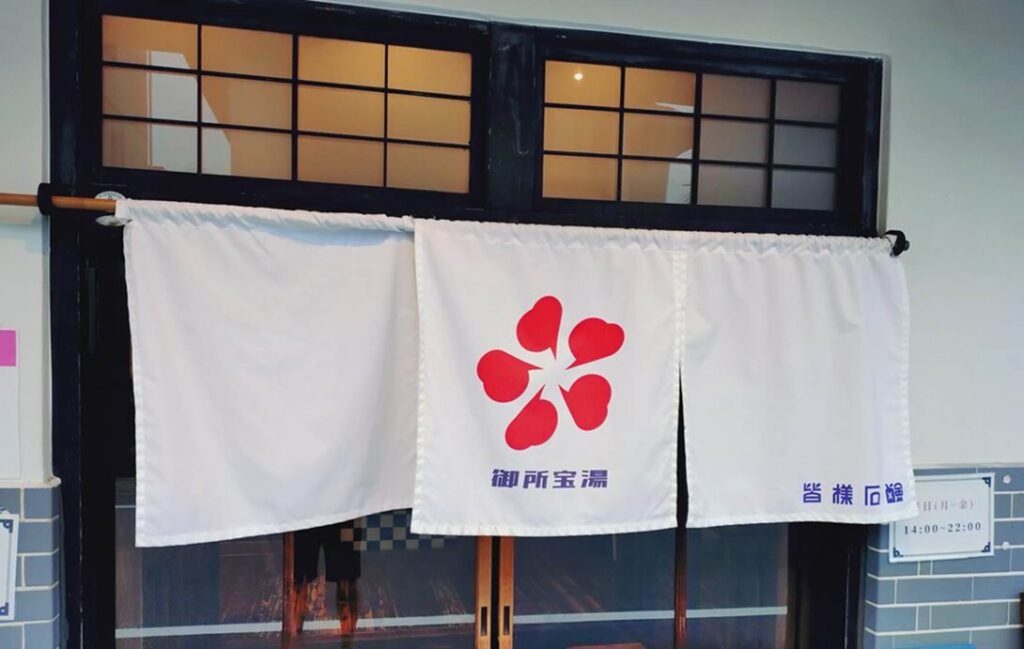
Gose Takarayu is located in Gose City, Nara Prefecture.
It is approximately a five-minute walk from either of the following stations:
・JR Gose Station
・Kintetsu Gose Station
Both stations are convenient for reaching the historic Gosemachi area.
If you are traveling by car, dedicated parking is also available.
The parking area is a short walk from the bathhouse, so you do not need to park directly in front of the building.
Address: 361-5 Mikunidori 2-chome, Gose, Nara 639-2216, Japan
For more detailed directions, please check the official website.
https://www.gosemachi.com/takarayu
| Day | Opening Hours |
| Weekdays | 2:00 PM – 10:00 PM |
| Weekends and public holidays | 11:00 AM – 10:00 PM |
| Closed | 2nd and 4th Wednesdays |
Unfortunately, Gose Takarayu does not open early in the morning, so you cannot enjoy a morning bath here!
Please check the latest opening hours before visiting.
| Category | Price |
| Adults (12 and older) | ¥530 |
| Children (6–11) | ¥200 |
| Children (under 6) | ¥100 |
| Sauna admission | Additional ¥370 |
Prices are based on the official website checked in October 2026 and may change.
If you want to use the sauna, you need to pay the additional sauna fee. Sauna users receive a wristband to indicate that they have paid for sauna access.
At the time of my visit, credit cards, transportation IC cards, and several electronic payment methods were accepted.
However, available payment methods may change, so bringing some cash is a good idea.
During our stay at RITA Gosemachi (now UHN Nara Mannenhitsu Hompo), admission to both the public bath and sauna was included in our accommodation package. Towels were also provided, so we could visit without bringing our own bathing supplies.
If you plan to stay at UHN Nara Mannenhitsu Hompo or Yado Charinko, check whether bath and sauna admission are included in your current accommodation plan.
Tattoo policies are an important consideration when visiting public baths and saunas in Japan. Some Japanese bathing facilities restrict entry for guests with tattoos.
According to the tattoo policy information available as of 2026, Gose Takarayu permits guests with tattoos from Monday to Thursday, but not on Fridays, weekends, or public holidays.
However, tattoo policies can change, and this schedule should not be treated as a guarantee of admission.
If you have tattoos, I strongly recommend contacting Gose Takarayu before visiting to confirm the latest rules.
Official website: https://www.gosemachi.com/takarayu/
Gose Takarayu is a local Japanese public bath rather than a large tourist-oriented spa. Therefore, I would not assume that English-speaking staff will always be available.
However, the GOSE SENTO HOTEL project has an official English website, which is helpful for international visitors planning a trip to Gose. If you are concerned about communication, I recommend checking the official information in advance and using a translation app if necessary.
Official English website https://en.gosemachi.com/
Even if you do not speak Japanese, understanding basic sento etiquette before visiting will make the experience much easier.
Before reviewing the sauna, let me briefly introduce the interior of Gose Takarayu.
Although the building has a traditional exterior, the facilities inside are clean and comfortable.
The illustration below shows the layout of Gose Takarayu, including the bathing areas, sauna, cold plunge, and outdoor relaxation spaces.
A: Hot Baths / B: Sauna / C: Cold Plunge / D: Outdoor Relaxation Area
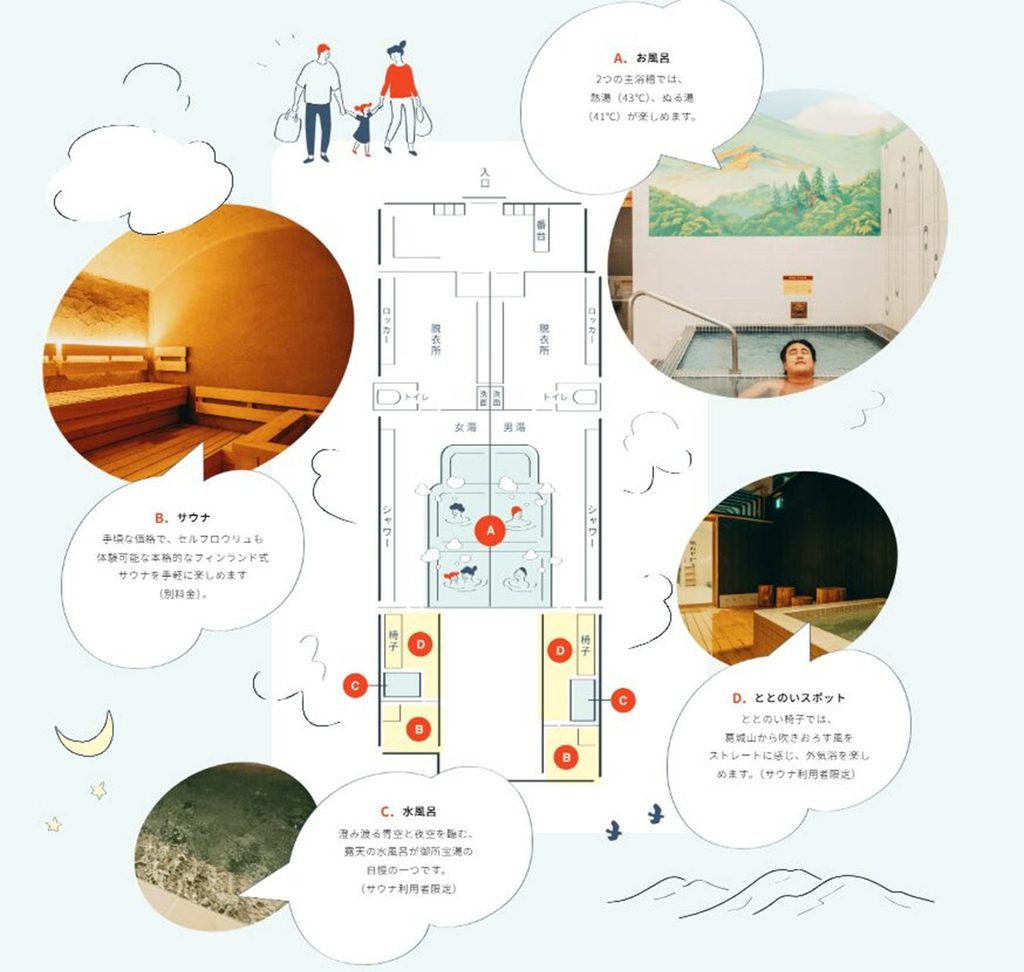
Image source: Gose Takarayu official website https://takarayu.gosemachi.com/#bath
When you enter Gose Takarayu, you will find the reception counter on the left.
On the right, there is a small merchandise area and seating space. Drinks such as bottled water and Pocari Sweat, a popular Japanese sports drink, are available for purchase.
You can also find original Gose Takarayu merchandise, including sauna hats and T-shirts. If you like collecting souvenirs from Japanese saunas, these might be worth checking out!
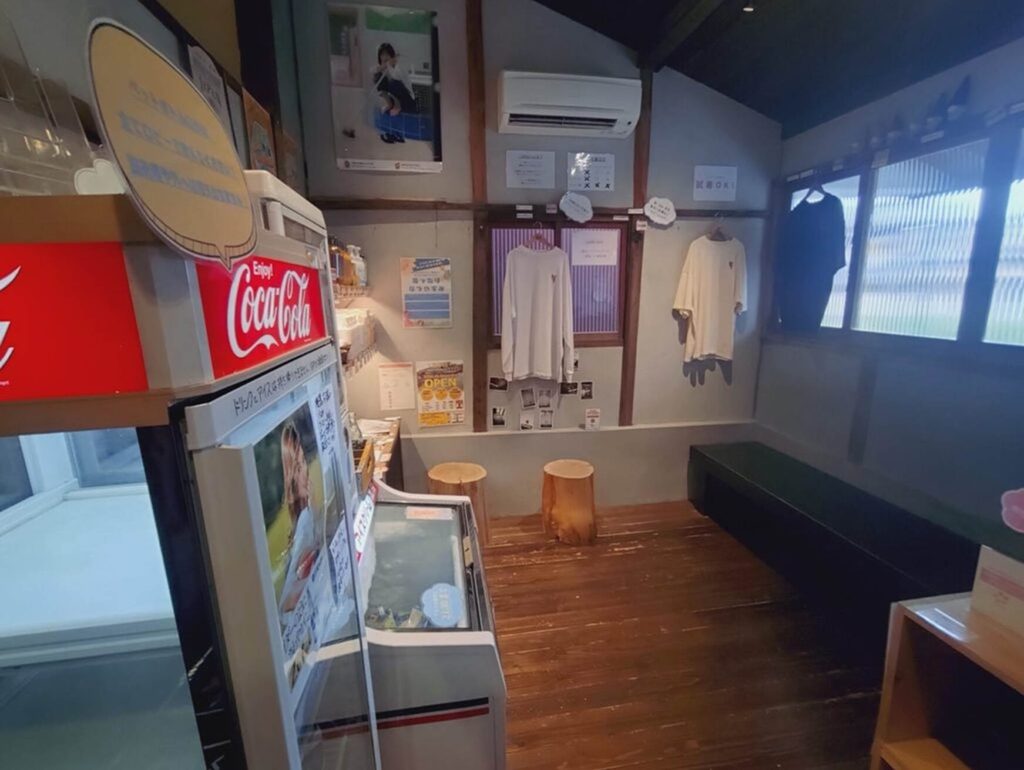
The entrances to the men’s and women’s bathing areas are located beyond the reception area.
Inside the changing room, you will find lockers and hair dryers. Basic bathing amenities are also available.
At the time of my visit, face towels and bath towels could each be rented for ¥100. Guests staying at participating accommodations could use rental towels without an additional charge. One thing I appreciated was that I did not need to bring much with me.
Having towels and basic amenities available makes visiting a local sento much more convenient, especially when traveling.
The bathing area includes showers and two main hot baths.
The water temperatures are approximately:
| Bath | Temperature |
| Hot bath | 43°C (109°F) |
| Warm bath | 41°C (106°F) |
The hotter bath is quite warm, especially if you are not used to Japanese public baths! If you prefer a more comfortable temperature, I recommend starting with the 41°C bath.
Shampoo, conditioner, and body soap are available.
Since this article mainly focuses on the sauna, I will keep the bath review relatively short.
However, even if you are not interested in saunas, the public bath itself is worth experiencing. It’s a nice opportunity to enjoy an everyday part of Japanese bathing culture.
Now, let’s move on to the main reason I visited Gose Takarayu: the sauna!
Beyond the main bathing area, there is a separate sauna section with an outdoor relaxation space, a Finnish-style sauna, and a cold plunge.
During my visit, there was no fixed time limit for using the sauna, so I could enjoy it at my own pace.
One of my favorite features of Gose Takarayu is its outdoor relaxation area.
In Japan, relaxing after a sauna session is often called totonou, a popular expression describing the deeply relaxed feeling that can come after alternating between a sauna, cold water, and rest.
The outdoor relaxation area at Gose Takarayu is relatively small, measuring approximately 6.5 square meters (70 sq ft), or about the size of a traditional four-tatami-mat room. There are around six wooden stools where visitors can sit and relax.
The area is open to the sky, allowing fresh outdoor air to flow through. This feels especially refreshing after spending time in the hot sauna.
I really enjoyed sitting quietly and feeling the natural breeze. The space is simple, but that simplicity is part of its charm. There are no unnecessary decorations or distractions. Just sit down, relax, and enjoy the fresh air.
Gose Takarayu has a Finnish-style sauna.
The sauna room is relatively compact, with comfortable seating for approximately six people. There are two levels of benches along one side, although the room can feel crowded when more people are inside.
Personally, I think around six people is a comfortable number for this sauna.
When I visited, the temperature was slightly above 80°C (176°F), which is somewhat moderate compared with some of the hotter Japanese saunas.
However, one of the best features is that self-löyly is allowed!
Löyly refers to the steam and heat produced when water is poured onto hot sauna stones.
With self-löyly, visitors can pour water onto the heated stones themselves rather than waiting for a staff member. This allows you to enjoy a more humid and intense sauna experience.
At Gose Takarayu, there was a notice instructing visitors to perform self-löyly no more than twice every five minutes. Please follow the posted instructions and be considerate of other sauna users.
※Please note that the self-löyly rules may change. Always follow the instructions posted at the facility. If the signs are only in Japanese, you can observe how other visitors use the sauna or ask the staff for guidance.
Another interesting feature is that there are no clocks in the sauna room or outdoor relaxation area. There is no regular wall clock or the typical 12-minute sauna timer often found in Japanese saunas. Conversation is also prohibited in these areas.
As a result, the atmosphere is quiet and peaceful.
The lighting inside the sauna is relatively dim, making it a great place to relax, meditate, or simply enjoy some quiet time. Personally, I really liked this atmosphere.
Rather than constantly checking the time, I could focus on how my body felt and enjoy the sauna at my own pace.
However, without a clock, it is important not to stay in the sauna longer than you feel comfortable.
The cold plunge is located between the sauna room and the outdoor relaxation area. It is relatively small, with enough space for approximately two adults to sit comfortably.
The water temperature varies depending on the season. According to the information available during my visit, the temperature is approximately:
・Summer: Around 15°C (59°F)
・Winter: Below 10°C to around 14°C (below 50°F to 57°F)
I visited in August, on a cloudy day. The water felt like it was around 15°C (59°F), and it was extremely refreshing after the sauna!
The combination of the warm sauna, cold plunge, and fresh outdoor air made for a very enjoyable experience.
I especially liked how close these three areas were to one another. You can move easily between them without walking through a large bathing facility. For a relatively small local sento, I thought the sauna facilities were very well designed.
If this is your first time visiting a Japanese public bath, there are a few important rules to know. Japanese sento are generally shared bathing spaces, so following local etiquette helps everyone enjoy their visit.
Here are some basic rules:
These rules may seem unfamiliar at first, but they are generally easy to follow. Once you understand the basics, visiting a Japanese sento can be a relaxing and memorable experience.

New to Japanese saunas?
I’ve written a separate guide explaining Japanese sauna rules and etiquette for international visitors.
If you’re planning to visit a sauna or public bath during your trip to Japan, I recommend reading it first!

Absolutely! I really enjoyed my visit to Gose Takarayu.
Although it is a relatively small local bathhouse, it offers an excellent combination of traditional Japanese bathing culture and modern sauna facilities. The Finnish-style sauna, self-löyly, cold plunge, and outdoor relaxation area were all enjoyable.
What I particularly liked was the quiet and peaceful atmosphere. There are no clocks in the sauna or outdoor relaxation area, and conversation is restricted. This made it easy to forget about time and simply relax.
I also appreciated the fact that Gose Takarayu is part of the larger GOSE SENTO HOTEL project. Rather than visiting a standalone sauna, you can combine the experience with a stay in a renovated traditional Japanese house, a delicious meal at a local restaurant, and a walk through the historic streets of Gose.
In fact, although I originally visited Gose mainly because of our family trip and the sauna, I ended up falling in love with the town itself. It was such a pleasant place that I wanted to return again!
If you are visiting Nara and want to experience something different from the famous temples and major tourist attractions, I highly recommend considering Gose Takarayu.
It is particularly worth visiting if you enjoy saunas, traditional Japanese culture, and quieter local destinations.
And if you have enough time, don’t just visit the bathhouse. Take a walk around Gosemachi and enjoy the town as well!
Planning a trip to Gose?
I’ve written a detailed review of the GOSE SENTO HOTEL project, including our stay at UHN Nara Mannenhitsu Hompo, local dining, and other places to explore in the historic town.
Check out the article below!
GOSE SENTO HOTEL Review: Stay, Eat, and Enjoy a Sento in Historic Gose, Nara
Thanks for reading!
Fin